
Drivers with any background or skill level can take part. Organizers run these sessions in a controlled environment. Instructors supervise the driving, which remains non-competitive. During a first HPDE event, drivers can learn how their car reacts when pushed to its limits. New drivers can use beginner track day tips, such as checking over their car, gathering the right documents, and choosing the right gear. Knowing what to bring to a track day helps drivers stay organized and reduce stress while they prepare.
Understanding HPDE Basics
Performance driving events (HPDEs) are held at various sites across the United States and teach driving skills and safety. Drivers of any skill level can participate, and the focus remains on learning and improvement rather than lap times.
| Aspect | Detail |
|---|---|
| Run Groups | Skill-based levels |
| Instructor Role | In-car guidance |
| Classroom Time | Theory sessions |
| Passing Rules | Controlled zones |
| Flags | Safety signals |
| Session Length | Typically 20 minutes |
| Focus | Skill, not speed |
| US Organizers | SCCA, NASA, local clubs |
| Car Type | Any safe, street-legal car |
Registration And Required Documents
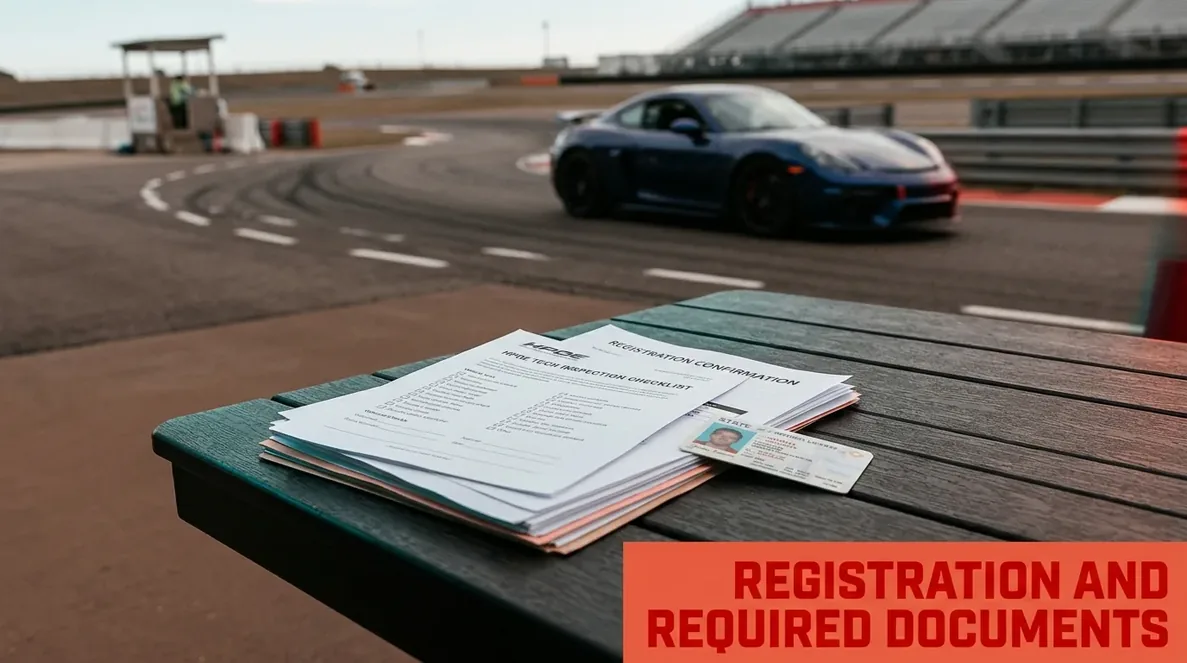
Start the HPDE tech inspection checklist a few days before the event and gather all required documents early. This allows the driver to focus on the track upon arrival. Complete these tasks before the event:
- Confirm event date and location;
- Print the registration confirmation email;
- Download and print the HPDE tech inspection checklist;
- Verify the helmet’s Snell or ECE rating;
- Check the event’s specific sound limits;
- Bring a valid driver’s license;
- Prepare emergency contact information.
Track Day Car Prep Overview
An HPDE checklist starts with the car, as its mechanical condition affects both safety and track performance. Every item on the list is important for a thorough pre-event inspection. Check the following components:
- Tires: Inspect tread depth and sidewalls for damage;
- Brakes: Confirm pad thickness and pedal firmness;
- Steering: Check for play or unusual resistance;
- Suspension: Look for worn or loose components;
- Seats: Verify secure attachment points;
- Belts: Confirm restraint systems fasten correctly;
- Leaks: Identify and correct any fluid leaks;
- Fluids: Check oil, coolant, and brake fluid levels;
- Battery: Confirm secure mounting and terminal protection;
- Loose items: Remove all objects from the cabin and trunk.
Tires, Wheels, And Pressures
Proper tire and wheel care gets a car ready for the track. Driving on a track generates more heat and wear on tires compared to regular street use. Missing any part of the tire and wheel care process raises safety risks. Follow these steps:
- Tread depth check: Measure tread depth across all 4 tires.
- Sidewall inspection: Examine each sidewall for cracks or bulges.
- Hubcap removal: Remove all hubcaps and decorative wheel covers.
- Lug nut torque: Tighten lug nuts to the manufacturer’s specification.
- Cold pressure recording: Measure tire pressure on all 4 tires at the start of the event day.
- Hot pressure recheck: Measure pressures again after each session ends.
- Pressure change log: Write down any notable pressure shifts between sessions.
Brake Preparation For Circuit Use
First track day checklist prioritizes brake readiness. Track sessions put heavy load on brakes during rapid stops at high speed. Brakes experience more stress during track sessions than normal street use. Brake preparation for track events exceeds standard street checks. Prepare the brakes with these checks:
- Pad thickness – confirm adequate pad material remains prior to departure;
- Rotor condition – inspect the surface for smooth, even wear;
- Fluid age – replace fluid past its service interval;
- Pedal feel – verify the pedal stays firm under repeated pressure;
- Line integrity – check lines for cracks or leaks;
- Brake lights – test all lights for correct function;
- Cool-down laps – plan at least one low-speed lap after each hard session.
Fluids, Battery, and Engine Checks
Under-hood checks are essential for track day car preparation. Thoroughly addressing under-hood checks is necessary for safe and reliable performance on the circuit. Complete these checks before the event:
- Check engine oil level: Confirm the dipstick reads within the correct range;
- Top up all fluids: Add coolant, power-steering fluid, and transmission fluid to correct levels;
- Inspect the coolant reservoir and hoses: Look for cracks, swelling, or discoloration;
- Scan the engine bay for leaks: Identify any fresh oil or fluid residue;
- Confirm the battery tie-down is secure: Loose mounts fail technical inspection;
- Pack 1 quart of spare motor oil: Track use raises oil consumption;
- Bring paper towels: Use them for quick fluid-level checks during the event.
Required Driver Gear And Clothing
Bring track day safety gear that satisfies both comfort and protection requirements to every HPDE event. In the United States, each organizer can set different rules for clothing, so check the event registration page before attending. Prepare the following gear and clothing:
- Helmet rating: Snell or ECE certification required;
- Closed-toe shoes: Required for all driving sessions;
- Long pants: Cotton or Nomex fabric only;
- Sleeves: Full-length cotton or Nomex fabric only;
- Spare clothes: Bring a full change for time outside the vehicle;
- Second shoes: Keep a comfortable pair for paddock use.
Typical HPDE Day Schedule
Drivers refer to the event schedule when planning their arrival at an HPDE event. Before the day begins, they get their car ready. In the United States, most organizers follow a set structure for HPDE events.
| Time Block | Main Activity |
|---|---|
| Early Morning | Arrival and setup |
| 7:30 – 8:30 AM | Registration and tech inspection |
| 8:30 – 9:00 AM | Drivers’ briefing |
| 9:00 – 9:30 AM | First track session |
| 9:30 – 10:00 AM | Classroom instruction |
| Alternating blocks | Track sessions and classroom |
| Late Afternoon | Final track session |
| End of Day | Debrief and pack |
Between Session Car Checks
Keep the HPDE checklist open throughout the day. Inspect your car during breaks between sessions. Use these checks to find issues and prevent them from becoming problems. Follow these steps after each session:
- Park car safely in paddock.
- Pop hood to release heat.
- Check engine oil level quickly.
- Measure tire pressures accurately.
- Inspect tire tread for wear.
- Re-torque lug nuts where required.
- Clear cabin of loose items.
- Confirm next session time.
Weather Planning And Personal Comfort
Sun, heat, wind, and rain affect driver focus and tire grip on the track. Prepare for changing weather with these track day tips:
- Layers: Adaptable clothing for temperature shifts;
- Rain jacket: Protection from wet conditions;
- Sun hat: Defense against UV exposure;
- Sunscreen: Skin protection during extended outdoor periods;
- Cooler: Keeps drinks and ice available;
- Water: Supports hydration across repeated sessions;
- Snacks: Stable energy between sessions;
- Shade: Personal canopy for paddock intervals;
- Towel: Handles sweat and rain throughout the day.
After the Final Session
The HPDE checklist continues after the last lap. Drivers follow these end-of-day steps to prepare the vehicle for road use before leaving the circuit:
- Brake cool-down: Allow brakes to reach ambient temperature fully.
- Tire pressure check: Set pressures to road-use specifications.
- Fluid leak inspection: Examine the ground and engine bay for fresh leaks.
- Wheel torque recheck: Verify fastener torque one final time.
- Number removal: Strip all event tape and number panels.
- Gear packing: Collect tools and personal belongings.
- Equipment return: Hand back any rented items to the organizer.
- Maintenance notes: Record any follow-up service needs for the vehicle.
Conclusion
HPDE rewards drivers who develop circuit skills, and thorough track day car preparation is essential. Knowing the event structure helps drivers plan the day effectively, while a practical packing list prevents forgotten items. Reviewing event notes supports ongoing improvement. Refining preparation routines helps drivers register for future circuit sessions with confidence.
FAQ
What Should A First Track Day Checklist Include?
Inspect your car’s tires, brakes, and fluids before heading to the track. Bring your helmet and shoes. Make sure to pack your license and registration. Take water, snacks, and an item that provides shade.
How To Prepare For Your First Track Day?
Look over your car and gather the gear you will need. Confirm that you have completed the event registration. Before leaving, read the event rules to make sure both you and your car meet all requirements.
What To Expect At An HPDE Event?
At HPDE events, drivers attend structured classroom sessions where expectations are defined. Certified instructors guide drivers during track time. The format is instructional and non-competitive, with safety and skill development as core priorities.